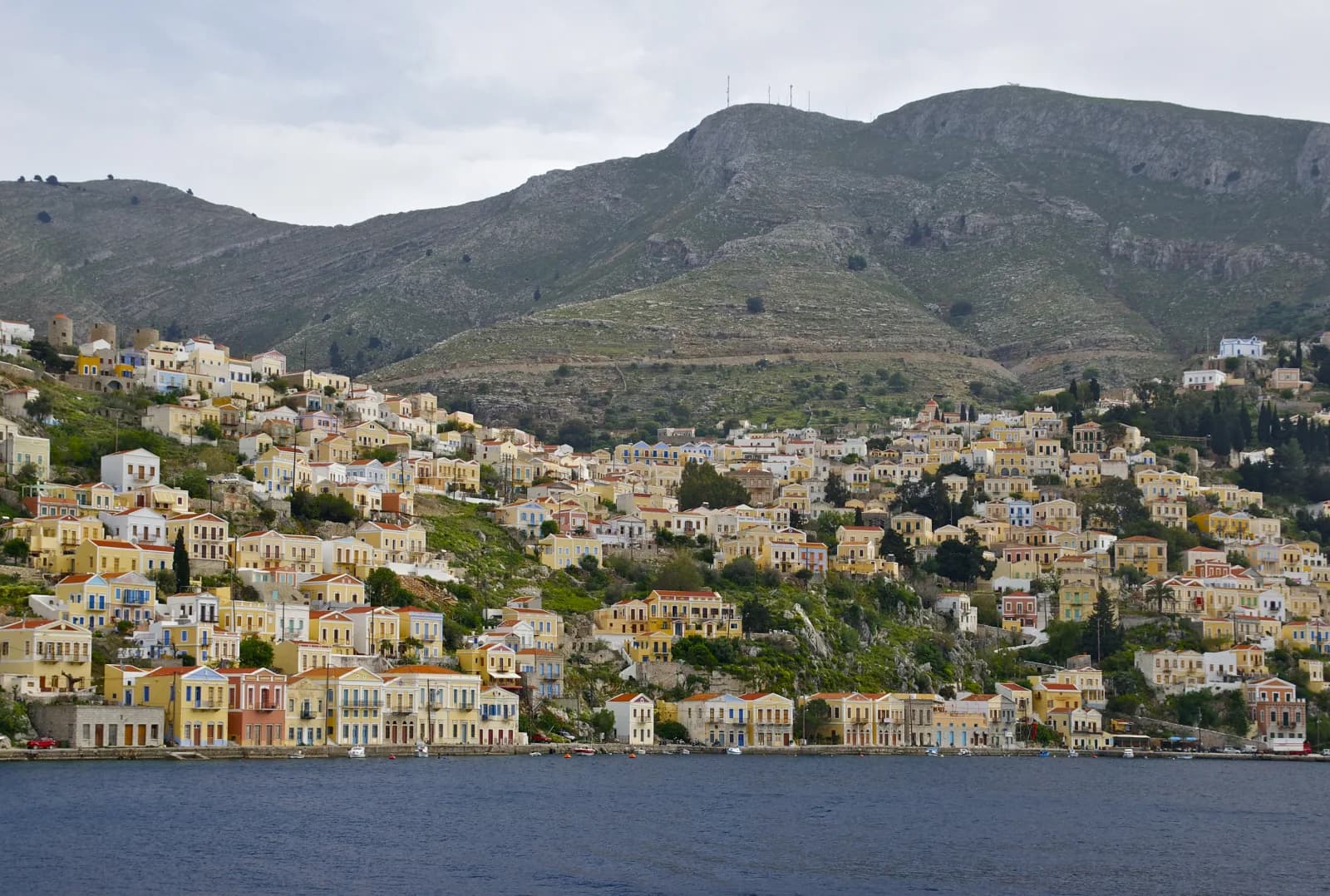
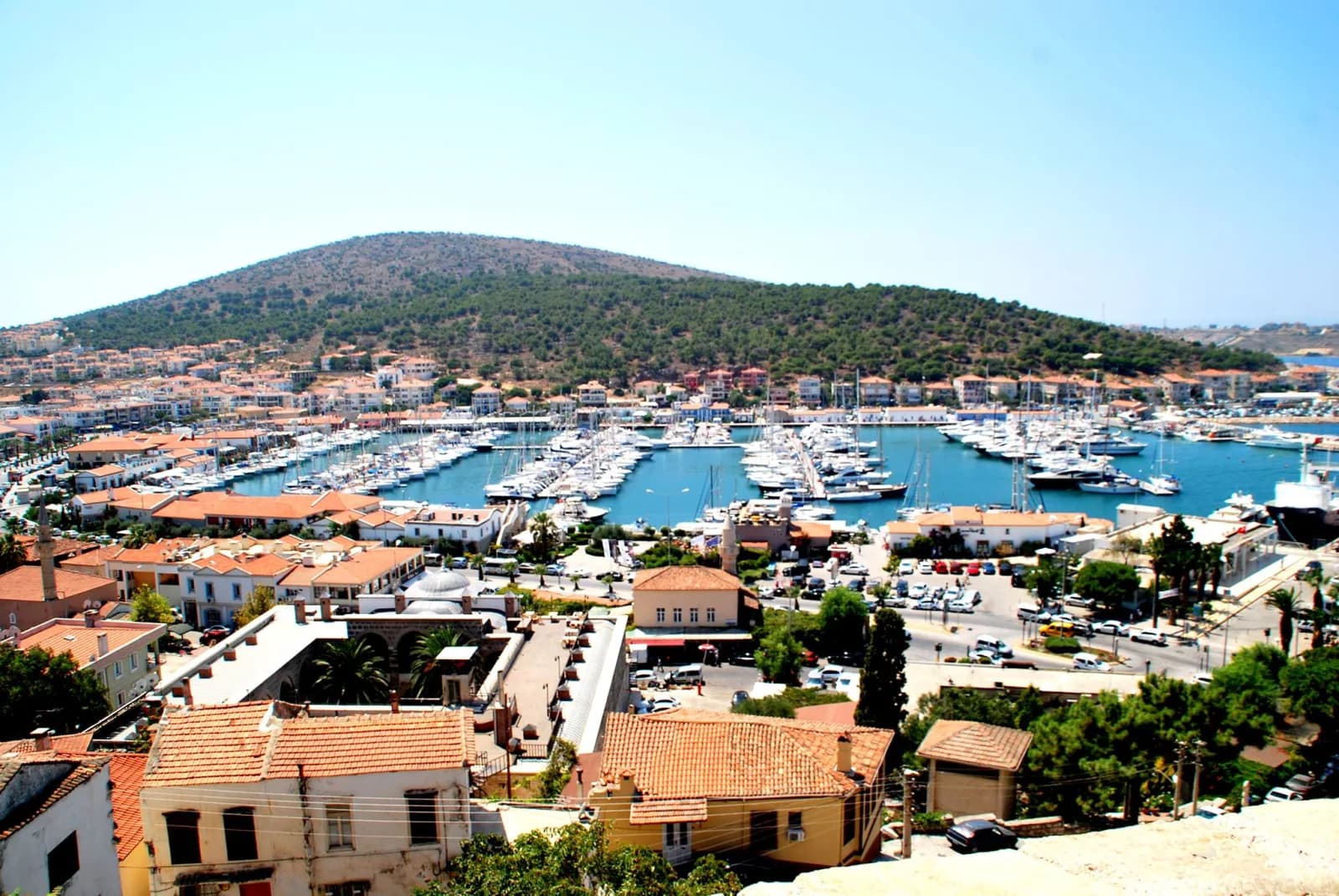
It is possible to travel from Bodrum to Santorini by ferry, but there is **no direct route** where you can board a single vessel and arrive. This journey is a route that requires planning, involving a Turkey–Greece crossing plus at least one domestic ferry connection. In this guide, we honestly explain the realistic itinerary connecting to the Cycladic islands via Kos, durations, starting prices, and the critical visa rule that most sources overlook.
\n\nOverview: Honest Expectation Management
\nLet's be clear upfront: Bodrum is a gateway to the Dodecanese islands, and the nearest Greek island is Kos. Santorini, on the other hand, is located in the Cyclades archipelago, much further to the southwest. The regular, guaranteed direct ferry network between these two island groups is weak. Therefore, the Bodrum–Santorini journey practically works as follows:
\nBodrum → Kos → (connection via Naxos or Mykonos or Paros) → Santorini.
\nThis means at least **one connection and a long day**. If connections don't align, an overnight stay on an intermediate island might be necessary. If speed and comfort are your top priorities, it's worth considering the flight alternative from Bodrum to Santorini (usually with a layover in Istanbul or Athens); the ferry route is more for travelers seeking scenery, island hopping, and flexibility. Nevertheless, for those who wish to travel by ferry, the three-stage plan below is the most reliable way.
\nWhy is there no direct route? Because although Kos is a strong hub for the Dodecanese, its main network of connections is directed towards neighboring Dodecanese islands like Rhodes, Kalymnos, Patmos, Symi, and Leros. The Cyclades archipelago, on the other hand, is a separate network organized around Athens' departure ports (Piraeus and Rafina). Bridge routes between the two networks are seasonal, operate a few days a week, and are long. Knowing this structural reality from the outset is key to making the right plan without experiencing disappointment.
\nImportant: All journey durations on this route are solely vessel travel times; they do not include passport control, connection waiting times, or inter-port transfers. The actual door-to-door duration is added on top of these. Instead of trying to fit three separate ferries into a single day, spreading the journey over two days is both more realistic and more enjoyable for most passengers.\n\n
Stage 1: Bodrum → Kos (Turkey–Greece Crossing)
\nThe first leg of the journey is the easiest part. The ferry between Bodrum and Kos takes **20–45 minutes** and operates with **daily** services during the summer season. It's a short, frequent, and reliable route; arriving in Kos before noon with an early morning service is critical for catching a Cycladic connection on the same day.
\nFor detailed schedules, departure port, and ticket information for this stage, you can check the Bodrum–Kos ferry services page and for a step-by-step guide, refer to the Bodrum–Kos ferry guide 2026 article. There are also crossings to Kos from Turgutreis port near Bodrum; alternatively, you can check the Turgutreis–Kos ferry services page.
\nThe key to planning this stage is timing. The earlier you arrive in Kos, the higher your chances of catching the long bridge route extending to the Cyclades on the same day. Because services like Kos–Naxos or Kos–Mykonos usually depart once a day at specific times; someone arriving in Kos in the afternoon will mostly miss this connection. Therefore, departing with the first Bodrum–Kos service in the morning means gaining time for the second stage.
\nKos is a strong Dodecanese hub: there are daily services to Rhodes (1h 50m, starting from €11.50), half-hour services to Kalymnos, and services to Patmos, Symi, and Leros most days of the week. So, once you reach Kos, traveling within the Dodecanese is very easy. However, our goal is to go beyond these islands, to the Cyclades — and here things change. Below, we discuss the bridge routes extending from Kos to the Cyclades and the most logical connection point to Santorini. Remember: if you entered Kos with a visa on arrival, you cannot transfer to Rhodes or any other Dodecanese island; we have detailed the impact of this rule on the entire route in the visa section at the end of the article.
\n\nStage 2: Kos → Cycladic Islands Options
\nThis is the decisive part of the route. From Kos to the Cyclades archipelago, there are direct but long seasonal routes via **Blue Star Ferries**. Verified options are as follows (starting prices for single economy seats, excluding vehicle/cabin; subject to change based on season and service):
\n\n\n\n\n\n\n\n\n\n\n| Destination from Kos | Operator | Duration | Summer Frequency | Starting Price |
|---|---|---|---|---|
| Naxos | Blue Star Ferries | ~6h 35m | 1–2 per week | from €42 |
| Paros | Blue Star Ferries | ~8h 10m | 1–2 per week | from €33 |
| Mykonos | SeaJets, Blue Star | ~10h 20m | 2 per week | from €74.70 |
| Syros | Blue Star Ferries | ~6h 55m | 1–5 per week | from €47 |
These routes are long and operate only on specific days of the week. As seen in the table, durations range from 6.5 hours to over 10 hours; therefore, you should choose your connecting island not only based on price but also on the frequency of onward connections to Santorini.
\nIn terms of the easiest onward connection to Santorini, **Naxos is the most logical transfer point**. Not only is the Kos–Naxos route (approximately 6h 35m, starting from €42) the shortest Cycladic connection in the table, but the Naxos–Santorini route is also an extremely frequent and affordable connection, with up to 8 services per day in summer. Paros is similarly accessible from Kos and located in the center of the Cyclades; Mykonos, while a longer and more expensive transfer (from Kos ~10h 20m), is a strong alternative for those who wish to include a famous stop on their itinerary. Considering the balance of budget and time, a Naxos transfer is the smartest choice for most travelers.
\nIs there a direct ferry from Kos to Santorini?
\nIt's important to be honest here: a **direct route from Kos to Santorini is weak and uncertain**. Some third-party ticket engines show approximately one direct Blue Star service per week during high season (around 4.5 hours, in the €50–79 range); however, this information is **based on a single source group and is not guaranteed**. If you happen upon a lucky day, you might use this service, but don't base your plan on it. The reliable way is to transfer via Naxos or Mykonos.
\n\nStage 3: Naxos / Mykonos → Santorini
\nOnce you reach the Cyclades, the final leg is the easiest part, as this inter-island ferry network is one of Greece's busiest and most frequently operating routes.
\n- \n
- Naxos → Santorini: Approximately 1 hour by high-speed catamaran, up to 2h 45m by conventional ferry. During summer, it increases to up to **8 services per day**; starting price **from €31.50**. Operated by Blue Star, Fast Ferries, and SeaJets. It's a flexible and affordable connection. \n
- Mykonos → Santorini: Approximately 1h 50m by the fastest catamaran, average 2h 30m. As only high-speed ferries operate on this route, the base price is higher: **starting from €82.50**. Operated by SeaJets and Golden Star Ferries. \n
Note the price difference: on the Naxos–Santorini route, both high-speed catamarans and conventional ferries are available, so the base price is lower (from €31.50). On the Mykonos–Santorini route, however, only high-speed ferries operate, so the base price nearly doubles (from €82.50). This makes a Naxos transfer advantageous not only in terms of duration but also cost. Since there are numerous services from both islands to Santorini throughout the summer, the risk of not finding a connection in the final stage is the lowest.
\nOnce you arrive in Santorini, you can start exploring the island; if you wish to include Mykonos in your itinerary, the Mykonos destination guide might be useful. For Santorini's ports, transportation, and travel tips, check out the Santorini destination guide.
\n\n2 Sample Scenarios: Duration Comparison
\nLet's compare two realistic scenarios to illustrate the journey. Durations are solely vessel travel times; they do not include connection waiting times or transit procedures.
\n\n\n\n\n\n\n\n\n| Scenario | Route | Total Travel Time (approx.) | Possible on Same Day? |
|---|---|---|---|
| A — Fast / One-Day Attempt | Morning Bodrum → Kos (20–45m) → direct Kos–Santorini on a lucky day (~4.5h) | ~5–6 hours + transit/waiting | ⚠️ Only if a direct service is available that day — not guaranteed |
| B — Comfortable / 1-Night Stay | Bodrum → Kos → Naxos (~6.5h, overnight stay in Naxos) → next day Naxos–Santorini (~1–2.5h) | ~8–9 hours travel, spread over 2 days | ✅ Recommended plan — no connection stress |
Departing from Bodrum in the morning and arriving in Santorini the same evening is theoretically possible, but only if a direct Kos–Santorini service is available that day and no delays occur. In practice, **Scenario B** is much safer: traveling from Kos to Naxos, staying overnight, and then arriving in Santorini the next day with a short Naxos–Santorini service, feeling refreshed. Naxos is an enjoyable Cycladic island for both accommodation and dining, so this necessary stop can be seen not as a loss, but as a bonus to the itinerary. We recommend Scenario A only to travelers with flexible dates who have confirmed in advance that a direct Kos–Santorini service genuinely exists that week. To facilitate multi-island planning and see connections between stages, you can use our travel planner.
\n\nAlternative: Fewer Connections via Rhodes
\nThe Bodrum–Kos route is not the only solution. If you can depart from southern Turkey, **traveling via Rhodes might actually involve fewer connections**. Because Rhodes is the only gateway island with a confirmed direct route to Santorini: the direct Rhodes–Santorini Blue Star service takes approximately 11 hours, operates 3–7 days a week, and **starts from €20.50**. This is much more reliable compared to the uncertain direct route from Kos.
\nSo, if you can depart from Fethiye or Marmaris, the Rhodes route can get you to Santorini with a single transfer (Turkey crossing + one direct Greek route). In short, the decision can be summarized as follows: if you are around Bodrum and wish to see the Cyclades (Naxos, Paros, Mykonos) as well, the Kos route is logical; but if your sole destination is Santorini and you can depart from the south, Rhodes' confirmed direct route offers fewer transfers and less uncertainty. For a detailed comparison with the Bodrum–Kos route, be sure to read the Turkey to Santorini ferry — Rhodes connection guide article.
\n\nCritical Visa Warning
\n\n\nThis route requires a FULL Schengen visa. The visa on arrival (Visa Express) program for Turkish citizens is **valid** for Kos — meaning you can enter Kos with a visa on arrival. HOWEVER, the visa on arrival is **only valid for the island of entry**. Transferring from Kos to another Greek island (including Naxos, Mykonos, Santorini) with this visa is **PROHIBITED**. Furthermore, Santorini and other Cycladic islands are not covered by the visa on arrival program; these islands require a full Schengen visa.
\nConsequently, if you plan to undertake the Bodrum → Kos → Santorini connecting journey, **obtaining a full (multiple-entry) Schengen visa before your trip is mandatory.** A visa on arrival is not sufficient for this route. For visa on arrival rules and the list of covered islands, consult the Greek islands visa on arrival 2026 guide.
Tickets and Practical Tips
\n- \n
- Risk of separate tickets: On this route, you will mostly purchase each leg (Bodrum–Kos, Kos–Naxos, Naxos–Santorini) as separate tickets. There is no combined guarantee on a single ticket; therefore, if there's a delay in one leg, **you might miss your connection** and need to buy new tickets. \n
- Plan flexibly: Allow buffer time between connections. Instead of trying to squeeze three separate ferries into the same day, include an overnight stay on an intermediate island from the outset. \n
- Catch an early service: If you cross from Bodrum to Kos early in the morning, your chances of catching a Cycladic connection that day increase. \n
- Confirm prices: All figures above are starting ("from") prices; they increase with season, operator, and occupancy. Always verify the current fare before purchasing your ticket. \n
- Season: Most Kos–Cyclades and inter-Cycladic routes operate intensively between April and November; services become less frequent or cease during winter months. \n
- High-speed or conventional: Especially on Mykonos–Santorini and routes departing from Kos, prices for high-speed catamarans versus conventional ferries can double. Choose according to your budget. \n
- Check for strike possibilities: Ferry services in Greece can occasionally be affected by seafarers' union strikes; services are canceled on these days. Verifying the current service status before departing is critical, especially on this multi-stage route, to avoid missing connections. \n
- Early booking advantage: During high season, Kos–Cyclades bridge routes operate only a few days a week and seats are limited, so booking tickets for these long stages as early as possible provides both seat guarantee and lower starting prices. \n
For a comprehensive overview of the entire Greek inter-island connection logic and which islands can be reached from where, our Greek inter-island ferry guide 2026 article is a comprehensive reference.
\n\nSummary
\nThe ferry journey from Bodrum to Santorini is an adventure requiring at least one transfer and a long day, as there is no direct route. The most reliable route is Bodrum → Kos → Naxos → Santorini; an overnight stay in Naxos for comfort is a smart choice. Those seeking fewer transfers should consider the Rhodes route. And the most critical point: this journey cannot be done with a visa on arrival — obtain your full Schengen visa before you depart. Once on the island, there is a separate comparison of getting from Santorini airport to Fira, Oia and Kamari.