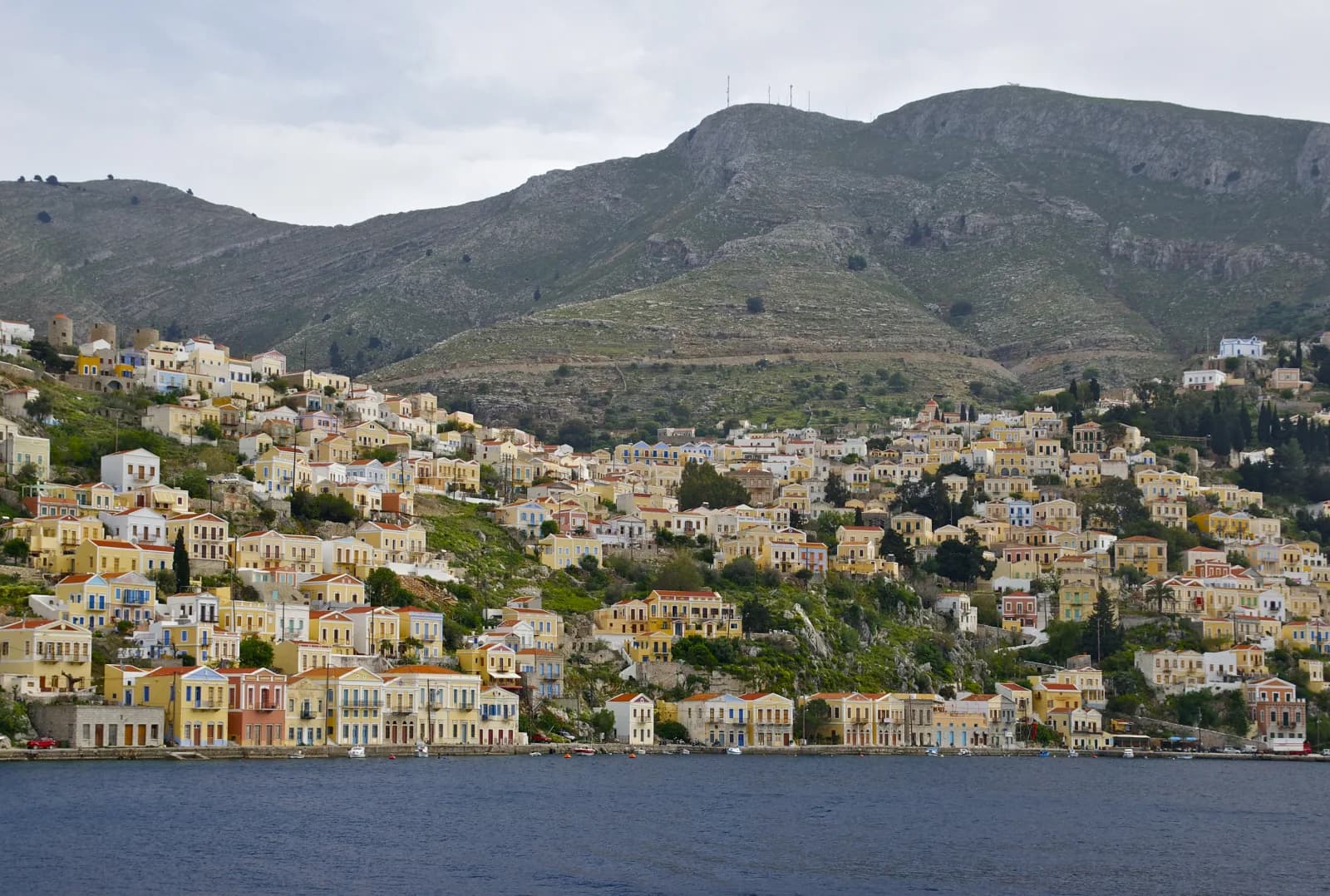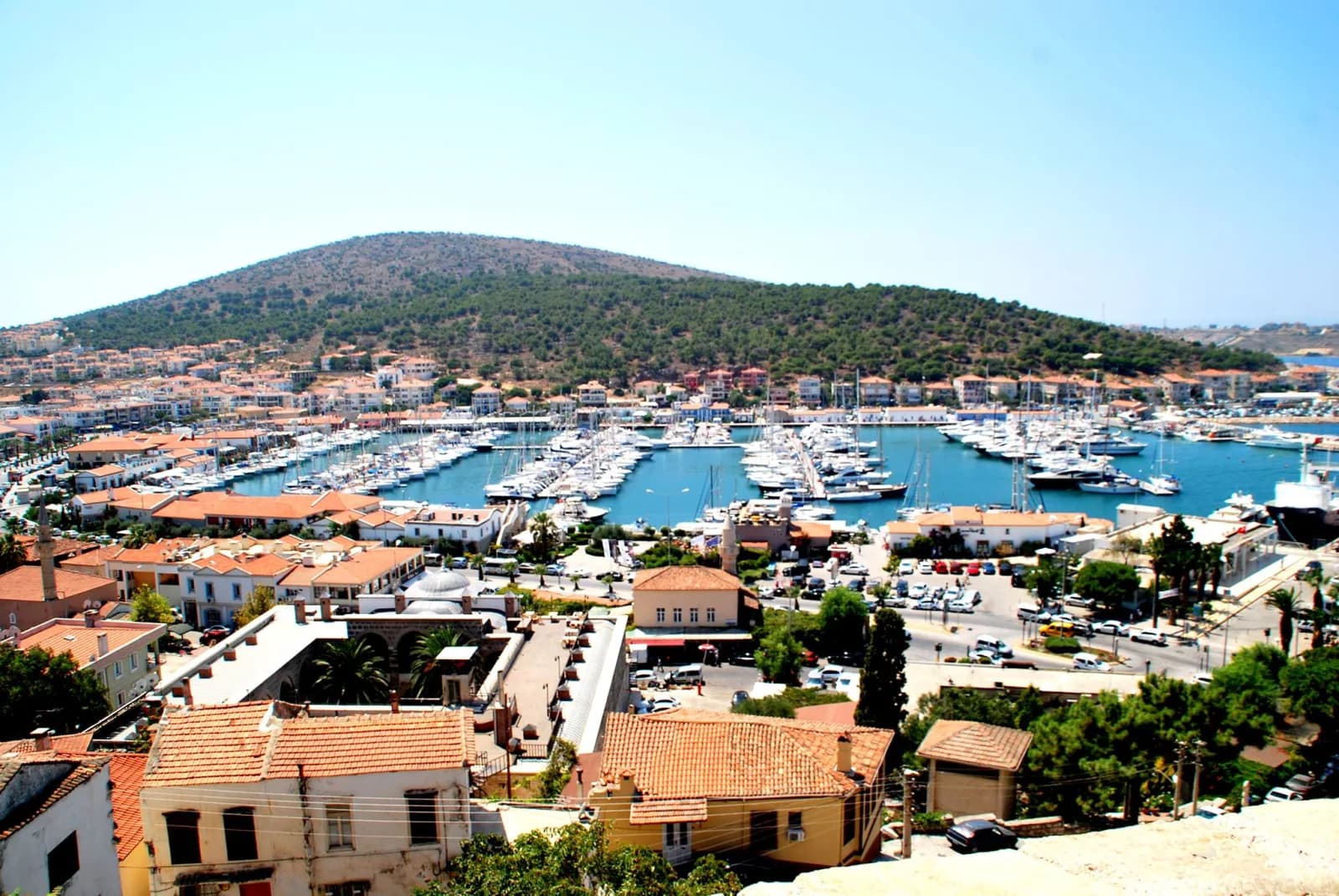
Greece's Visa on Arrival (Visa Express) program for Turkish citizens is still active in 2026 and covers a total of 12 Greek islands. However, the most important rule of this facility, which is almost never clearly stated in Turkish sources, is this: the Visa on Arrival is only valid for the island you enter. With this visa, it is forbidden to travel to another island, mainland Greece (Athens, Thessaloniki), or another Schengen country. If you plan to visit Santorini, Mykonos, or Athens, the Visa on Arrival will not work for you; a full Schengen visa is required.
In this guide, you will find the complete list of 12 islands accessible with a Visa on Arrival as of 2026, the Turkish departure port for each island, the visa fee, duration, and required documents. More importantly, we clearly explain the single rule that could make or break your plan: this visa is only for entry to one island; it does not grant the right to travel between islands or to the mainland.
12 islands accessible with Visa on Arrival (2026 updated list)
The program started with 10 islands in April 2024, expanding to 12 with the addition of Patmos and Samothrace in April 2025. The list remained unchanged in the 2026 extension; today, 12 islands are still included. Most of the islands on the list are in the East Aegean and Dodecanese groups, meaning they are the closest to the Turkish coast and can be reached by ferry in the shortest time. The table below shows the most common departure port from Turkey for each island and, if available, a link to the ferry schedule page.
| Island (Turkish) | Greek / English | Departure port from Turkey | Route / Schedule |
|---|---|---|---|
| Midilli | Lesvos (Mytilene) | Ayvalık / Dikili | Ayvalık–Lesvos ferry schedules |
| Sakız | Chios | Çeşme | Çeşme–Chios ferry schedules |
| Sisam (Samos) | Samos | Kuşadası | Kuşadası–Samos ferry schedules |
| Kos (İstanköy) | Kos | Bodrum / Turgutreis | Bodrum–Kos ferry schedules |
| Rodos | Rhodes | Marmaris / Fethiye | Marmaris–Rhodes ferry schedules |
| Symi (Sömbeki) | Symi | Marmaris / Datça | Marmaris–Symi ferry schedules |
| Leros (İleryoz) | Leros | Bodrum / Kuşadası üzeri | Dodecanese internal route |
| Kalimnos | Kalymnos | Bodrum üzeri | Dodecanese internal route |
| Limni | Limnos (Lemnos) | North Aegean connection | Internal route |
| Meis | Kastellorizo (Megisti) | Kaş | Kaş–Kastellorizo route |
| Patmos | Patmos (added April 2025) | Dodecanese internal route | Internal route |
| Semadirek | Samothrace (added April 2025) | North Aegean internal route | Internal route |
For all 12 of these islands, the Visa on Arrival is applied separately for each island; a visa issued for one island is not valid for another. The practical meaning of this list is that for a single-island holiday from Bodrum to Kos, Marmaris to Rhodes, Çeşme to Chios, or Ayvalık to Lesvos, the Visa on Arrival is more than sufficient, and you won't need to wait for an embassy appointment to get a Schengen visa. For specific details on Symi, you can also refer to our Symi island visa information guide.
Attention: These islands are NOT on the list
The most common point of confusion is the assumption that islands not on the Visa on Arrival list are also included in this facility. The following locations are excluded and require a full Schengen visa:
- Tilos: NOT on the Visa on Arrival list. It was not added throughout 2024–2026. Passengers traveling from Bodrum to Tilos must obtain a full Schengen visa. For schedule information: Bodrum–Tilos ferry schedules.
- Santorini, Mykonos, and other Cycladic islands: Visa on Arrival NOT available; Schengen required.
- Crete and South/Central Aegean islands like Paros: Excluded.
- Mainland Greece (Athens, Piraeus, Thessaloniki): Cannot be visited with a Visa on Arrival.
Tilos requires particular attention because it is geographically very close to islands on the Visa on Arrival list, such as Kos, Symi, and Rhodes, and belongs to the same Dodecanese group. Due to this proximity, Tilos might be assumed to be on the list, but it is not. Passengers planning to travel directly from Bodrum to Tilos must obtain a full Schengen visa before their trip. Similarly, Santorini and Mykonos, despite being two of the most popular islands for tourists from Turkey, have never been included in the Visa on Arrival program as they are part of the Cycladic group.
Thus, the Visa on Arrival is an exception designed only for the 12 East Aegean / Dodecanese islands listed above; it does not cover the rest of Greece. This distinction is particularly important because many travelers assume that the Visa on Arrival means "easy entry to Greece." However, the convenience is geographically limited: it is only for entry to these border islands. If your holiday plan includes a destination outside these 12 islands, you must plan for a full Schengen visa process from the outset.
Visa on Arrival conditions, duration, and fees
The basic rules of the program have largely remained the same since 2024:
- Stay duration: 7 days per island (cannot be extended).
- Official Greek visa fee: €60 (official fee collected at the port).
- Actual total cost: With the ferry company / agency service fee added to the official €60, the total actual cost rises to approximately ~€80–90. The "€85" figure mentioned in some Turkish sources reflects this total amount including service, not just the official fee collected at the port.
- Application method: The visa is technically issued "on arrival" (at the port); however, in practice, individual/spontaneous applications are not accepted. It is mandatory to apply in advance (with e-form and documents) through ferry companies or authorized agencies. Do not expect to go to the port and get a visa instantly there.
- Port procedure: Passport control, biometric (fingerprint) scanning, and document review are conducted.
The "separate for each island" nature of the 7-day period can be misleading for those dreaming of a multi-island holiday. A single Visa on Arrival grants you the right to stay only on that island for 7 days; if you wish to move to another island and stay there for 7 days, a new application and a new fee would be required for that island from scratch. Therefore, for someone planning to visit two or three islands, the Visa on Arrival is often disadvantageous in terms of both cost and practicality; for such travelers, a full Schengen visa is usually more sensible.
The reason for the confusing difference between €60 and ~€85 regarding the fee is that sources sometimes state only the official fee, and sometimes the total amount including the agency/ferry company service charge, as a single figure. To be clear: the official visa fee paid to the state at the port is €60; the total amount you pay can range from €80–90 depending on which company you apply through and the services you receive (document preparation, ticket package, etc.). It is healthiest to confirm the exact amount with the company you applied through before your trip.
Required documents
- Passport valid for at least 6 months (+ photocopy)
- Biometric passport photo
- Round-trip ferry ticket
- Hotel / accommodation reservation (except for day trips)
- Travel health insurance
- Bank statement for recent months / proof of financial means
- No TRNC visa stamp in passport (Visa on Arrival is not issued to those with a TRNC stamp)
The two most frequently overlooked points among the documents are the passport's validity for at least 6 months and the issue of the TRNC stamp. During the summer season, passengers with expiring passports can be turned away at the port; therefore, always check your passport's validity period before traveling. As the hotel reservation and health insurance requirements can vary for day trips, it is advisable to ask the company you are applying through which documents are mandatory based on your stay duration and itinerary.
Inter-island travel rule: The most critical point
This is the rule that can change your plan from the outset and is almost never clearly stated in Turkish sources: the Visa on Arrival is ONLY valid for the island you entered. This means the permission granted by your visa is to enter a single island, not a country. Many travel websites overlook this point, leading travelers to think "since I'm here, I'll pop over to the next island/Athens for a day" after arriving; however, this constitutes a visa violation and can lead to serious problems at border control.
With this visa, you cannot:
- Travel to another Greek island (e.g., Kos → Santorini or Rhodes → another island is forbidden).
- Travel to mainland Greece (Athens/Piraeus, Thessaloniki).
- Travel to another Schengen country.
- Stay for more than 7 days only on the island you entered.
Why is it forbidden? The Visa on Arrival is not a Schengen visa; it is an exception (derogation) implemented by Greece in coordination with the EU Commission and is granted only for entry to specific border islands. It does not provide Schengen free movement rights. A person wishing to visit multiple islands can obtain a separate Visa on Arrival for each island (each for a separate 7 days, separate fee), but this does not grant the right to free movement between these islands; each entry is a new visa process.
This situation is a serious trap, especially for travelers thinking, "I'll visit multiple Greek islands in one go." For example, if you plan to enter Rhodes with a Visa on Arrival and then take a day trip by ferry to Symi, even if Symi is on the Visa on Arrival list, you cannot make this crossing with your single visa; a new visa process would be required upon entry to Symi. If you want to travel freely between two islands, the most practical solution is usually to obtain a full Schengen visa. With a Schengen visa, you can freely travel across all 12 islands, the Cycladic islands, and the mainland.
Which scenario requires which visa?
| Scenario | Sufficient visa | Explanation |
|---|---|---|
| 5-day holiday in Kos | Visa on Arrival | Stay on a single island, within the rules. |
| Kos → Santorini | Full Schengen | Santorini is a Cycladic island, excluded; also, inter-island travel is forbidden. |
| Chios → Athens | Full Schengen | Travel to the mainland is forbidden with a Visa on Arrival. |
| Rhodes + Symi (two islands) | Separate Visa on Arrival for each island or full Schengen | Two separate entries = two separate processes; two islands cannot be visited with a single visa. |
| Bodrum → Tilos | Full Schengen | Tilos is not on the list; Visa on Arrival is not issued at all. |
For those wishing to reach Cycladic or mainland destinations via connecting routes, here are our detailed guides: Ferry from Turkey to Santorini (via Rhodes), How to get from Bodrum to Santorini by ferry, and How to get from Izmir to Athens by ferry. All these routes require a full Schengen visa.
Program status: What changed in 2026?
With the decision dated March 31 / April 1, 2026, the program was extended for another year until April 2027 (coordinated with the European Commission, third extension). There were no cancellations or reductions in 2026. The program has seen strong interest from Turkish tourism since its inception; according to official data, hundreds of thousands of express visas have been issued since the start of the application, and islands like Samos, in particular, have experienced a significant increase in Turkish visitors. This intense interest is cited as one of the main reasons behind the extension decisions.
The continuation of the program as an "exception" means its future depends on evaluations by the European Commission. Therefore, the list, fees, and duration could theoretically change in the future. For this reason, those planning to travel within the year are advised to verify the current status shortly before departure.
- April 2024: Program started with 10 islands.
- April 2025: Patmos and Samothrace were added, making it 12.
- April 2026: The list remained at 12 islands; the program was extended until April 2027.
Frequently asked questions and disclaimer
Can I go to Santorini with a Visa on Arrival? No. Santorini is a Cycladic island, not on the list of 12 islands, and due to the inter-island travel rule, it cannot be accessed from another entry island. A full Schengen visa is required for Santorini.
Can I visit two islands at once? No, not with a single Visa on Arrival. It is possible if you obtain a separate visa for each island; otherwise, a full Schengen visa is required.
How long can I stay? 7 days per island; this period cannot be extended.
Is the Visa on Arrival really issued at the port? The visa is technically issued at the port, but you must apply in advance through a ferry company or authorized agency. It would be incorrect to assume you can go to the port without any preparation and get a visa instantly; the document and e-form process must be completed before departure.
Can I travel to Athens with a Visa on Arrival? No. Mainland destinations like Athens, Piraeus, and Thessaloniki are outside the scope of the Visa on Arrival, and inter-island/mainland travel is forbidden. A full Schengen visa is mandatory for the mainland.
The information in this article is based on the situation valid as of June 2026. Visa on Arrival rules, fees, covered islands, and application requirements may change from time to time. Before your trip, always confirm the current status with your ferry company and official authorities. For general visa information, please refer to our visa guide page.